
Excitation-Contraction Coupling and Arrhythmia Lab
Studying the biology and treatment of cardiac arrhythmias
Using genetically-altered mice and human induced pluripotent stem cell-derived cardiomyocytes (hiPSC-CM) as model systems, ongoing research examines several key pathways of arrhythmias and sudden death in humans.
The laboratory performs comprehensive studies from the molecular level to the whole animal in each mouse model in order to better understand the mechanisms of arrhythmogenesis. To achieve this goal, a variety of approaches including single cell patch-clamp, intracellular calcium and cell shortening measurements, whole-heart electrophysiology, optical mapping and contractility measurements, and in vivo electrocardiogram and hemodynamic studies are performed.
Research in the lab has identified new therapeutic strategies (e.g., targeting dysfunctional RyR2 calcium release channels responsible for inherited forms of stress-induced sudden death), which then can be tested in the same model system and in human studies.
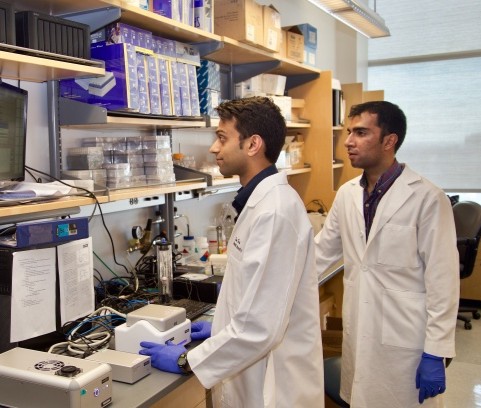
Research focus areas
Calsequestrin in Ventricular Arrhythmia and Sudden Death
The goal of this project is to test the contribution of calsequestrin to arrhythmia susceptibility and further elucidate the molecular and cellular mechanism(s) that lead to ventricular arrhythmias in response to inherited and/or drug-induced calsequestrin dysfunction.
Arrhythmia Mechanism in Sarcomeric Cardiomyopathies
The goal of this project is to explore possible mechanisms contributing to sudden death related to Troponin T mutation. In particular, the project tests the hypothesis that TnT mutations modify intracellular Ca handling, resulting in altered Ca transients and action potential remodeling, leading to cardiac arrhythmias.
Toward a Mechanism-Based Approach to Treating Atrial Fibrillation
The major goals of this project are to test the hypothesis that intracellular calcium leak generates AF risk that can be targeted with specific drug therapy, both in mouse models and in human clinical studies.
Pannexin channels in cardiac arrhythmias
The goal of this project is to determine if pannexin channels facilitate triggered arrhythmias by enhancing the probability for cell depolarization and propagated activity.

Principal Investigator
Bjorn Knollmann, MD, PhD
Professor of Medicine
Department of Medicine
Division of Genetic Medicine and Clinical Pharmacology
William Stokes Chair in Experimental Therapeutics
Email Dr. Knollmann for more information about the lab.
Lab Resources
The research and clinical missions of the Division of Genetic Medicine and Clinical Pharmacology are highlighted on the Department of Medicine's website.
The VUMC Animal Care and Use Program supports the responsible and ethical use of animals in research and ensures highest standards of care.
The Cell Imaging Shared Resource (CISR) is an institutional, fee-for-service, advanced microscopy resource.
A company of scientists, IonOptix supports preclinical researchers on their quest to better understand cellular and tissue mechanics.