
Inspired by patients, driven by science
Multidisciplinary approaches to the stratification of lung cancer
The Multidisciplinary Assessment and Stratification of Lung Cancer Biomarkers (MASLAB) at Vanderbilt University Medical Center is a collaborative research program dedicated to advancing early lung cancer detection and precision risk stratification through integrated imaging, clinical, and molecular data science.

Co-directed by Drs. Stephen Deppen, Eric Grogan and Fabien Maldonado, MASLAB unites experts in pulmonary medicine, thoracic oncology, radiomics, machine learning, biomedical engineering, biomarker science, clinical trials and biostatistics to develop and validate innovative tools that improve the diagnosis and management of indeterminate pulmonary nodules.
MASLAB’s research portfolio spans quantitative CT analysis, radiomics-based tumor characterization, multimodal predictive modeling, blood-based biomarkers, and pragmatic clinical trials embedded in real-world care.
The laboratory leverages Vanderbilt’s robust clinical datasets, cutting-edge computational infrastructure, and national collaborations, including the NCI EDRN and the CTSA, to translate novel imaging and biomarker signatures into clinically actionable tools.
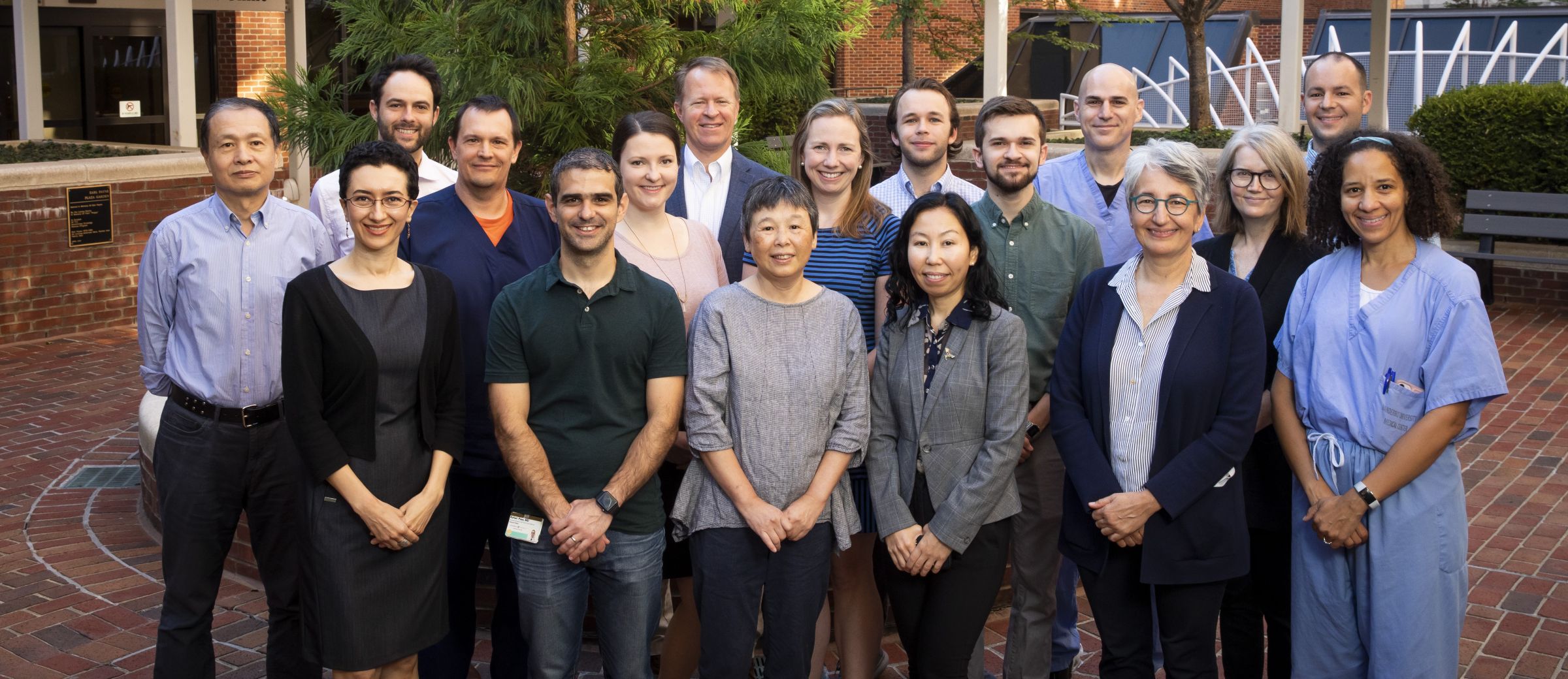
The Multidisciplinary Assessment and Stratification of Lung Cancer Biomarkers (MASLAB) team at Vanderbilt University Medical Center is a multidisciplinary group of physicians and researchers dedicated to advancing early lung cancer detection. Learn more about our team here.
MASLAB Initiatives
- Biomarker Development for Lung Nodule Risk Stratification: MASLAB is developing and validating multimodal biomarkers to distinguish malignant from benign pulmonary nodules. Ongoing work integrates clinical risk prediction (TREAT 2.0 model), blood-based cancer biomarkers, quantitative radiomics, and fungal biomarkers to improve diagnostic accuracy. This work is supported by an NCI-funded U01 through the Early Detection Research Network (EDRN; PIs: Grogan, Deppen).
- Pragmatic Clinical Trials in Lung Cancer Diagnosis: MASLAB investigators lead a robust portfolio of multicenter pragmatic clinical trials evaluating real-world diagnostic strategies for indeterminate pulmonary nodules. These include the completed VERITAS trial (NCT04250194) and the ongoing SPOT-IT trial (NCT06638398), led by Drs. Maldonado and Paez, which test-scalable, implementation-focused approaches to lung cancer diagnosis.
- Quantitative Imaging and Tumor Biology: The team conducts advanced translational research focused on characterizing lung adenocarcinoma biology and aggressiveness using quantitative imaging, whole-exome sequencing, and multiplex immunohistochemistry. This work aims to enable personalized management strategies and is supported by an NCI R01 in collaboration with Boston University (MPI: Maldonado).
- Veteran-Focused Lung Cancer Risk Modeling: Through a VA Merit Award, Drs. Deppen and Grogan are developing a veteran-specific lung cancer risk model that links service-related exposures with longitudinal healthcare data to refine lung cancer screening and risk prediction in veteran populations.

TREAT 2.0 Model
Indeterminate pulmonary nodules (IPNs) suspicious for lung cancer are common in clinical practice. The probability of cancer drives management decisions and depends on age, smoking, size, positron emission tomography (PET) avidity, growth, and the clinical setting, among other variables.
The TREAT 2.0 model is a web-based tool that provides reliable risk predictions for IPNs being evaluated in lung nodule or surgery clinics and maintains accuracy with incomplete input of the most common missing variables arising within clinical practice. It can assist the clinician for estimating the probability of cancer within their practice.
Godfrey CM, Shipe ME, Welty VF, et al. The TREAT 2.0 Model: A Lung Cancer Prediction Model for Indeterminate Nodules Referred for SpecialistEvaluation. Chest. 2023/06/17/ 2023.
Thoracic Biorepository
The Vanderbilt Thoracic Biorepository collaborates with academic and industry partners to discover and validate lung cancer imaging and liquid biomarkers.
Collection of approximately 100 lung tissue samples (tumors and matched tissue controls) and samples from approximately 150 bronchoscopies are projected per year. The biorepository team is supported by the NCI’s Early Detection Research Network and is one of two national clinical validation centers for the lung group.
The biorepository ships about 5000 aliquots of annually. To begin the process to access specimens or other biomarker resources, including biostatistical, market coverage, process evaluation and clinical implementation complete the request form or email Dr. Stephen Deppen.

News



Support lung cancer research
Click the link below to make a donation to support our research. On the donation page, choose “Other” from the drop-down menu. In the “Leave a comment” box, type “Thoracic Surgery Fund” or “Thoracic Surgery Oncology Research Fund” so your donation gets routed correctly.