
Dining Assistant Training Toolkit & Activities
Training Toolkit
Facilities using the Center for Quality Aging's Dining Assistant webinar series should retain a copy of all these materials for their state survey process.
- Dining Assistant Training Curriculum: Developed and utilized by Vanderbilt Center for Quality Aging for this training series.
- Attendance Record: PDF | Spreadsheet
- Written Evaluation: Designed to test Dining Assistant trainees on their knowledge of the curriculum.
- Performance Evaluation (Mealtime and Snack Time): For use by those evaluating Dining Assistant trainees on their interactions with residents at meal and snack times.
- Recruitment Flyer: For use in nursing homes and assisted living facilities to promote Dining Assistant training.
Additional Activities
This page provides in-person activities that long-term care facilities can use to supplement the webinar training series (related unit of the curriculum in parenthesis). We encourage facility staff and dietitians to lead these activities to improve the care provided by trained Dining Assistants.
Diet Card Matching Game (Unit 2)
- Ask the dietary manager to print a variety of meal tray tickets for either lunch or dinner.
- Take photos of residents' meal trays before the meal.
- Have the trainees form teams and see which team can match the diet types on the meal tray tickets with the correct photos.
Demonstration of Safe Feeding Techniques (Unit 3)
- Ask staff to form groups of three.
- First group member will play the role of the resident.
- Second staff person will practice feeding his/her co-worker.
- Third staff member uses the Snack Time Performance Evaluation to ensure that he/she is following the proper steps for offering and providing a resident food.
- Rotate roles until all staff members have had an opportunity to practice feeding.
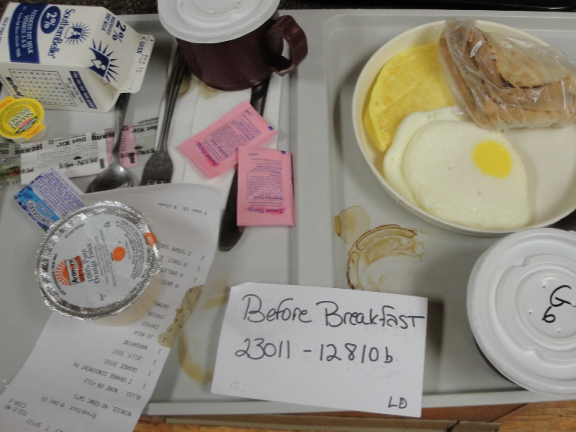
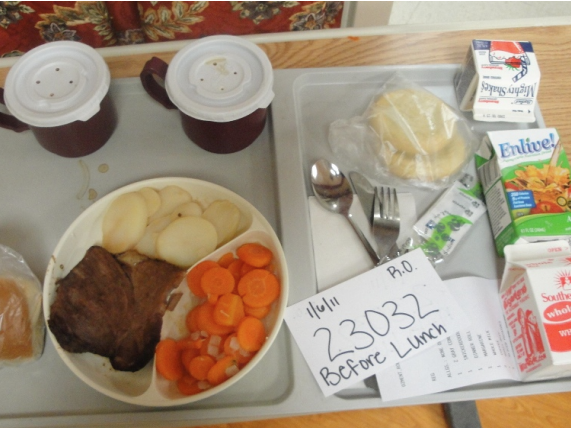
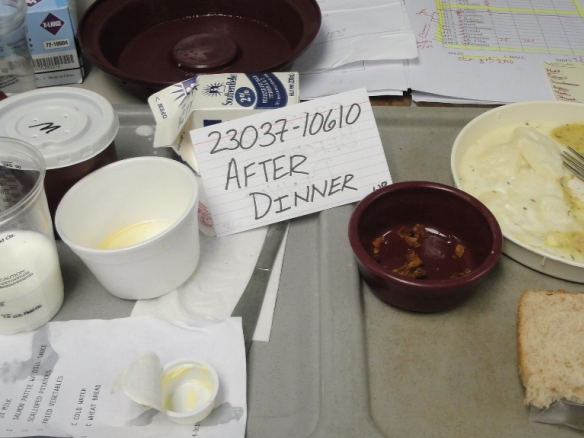
Estimating Food and Fluid Consumption (Unit 4)
Guidelines
To avoid errors and ensure the highest agreement between staff members, we recommend the following guidelines for calculating an estimate of total percentage consumed:
- List each food and fluid item on the tray at meal delivery time and record resident consumption of each item at meal tray pick-up time.
- Use a continuous percentage scale, from 0% to 100%, for estimation, instead of percentage categories.
- Each food and fluid item on the meal tray is counted equally as opposed to assigning differential values to different items.
- Ideally, consumption of fluids should be recorded in ounces, in addition to percentage consumed, to allow for accurate measure of hydration status.
- Oral liquid nutrition supplements consumed during the meal should not count in the total percent consumed estimation, though the amount consumed (in ounces) of the supplement should be recorded separately.
Sample Photos
Click the links below for more photos of pre- and post- meal trays to estimate food and fluid consumption.
Role Playing Appropriate Responses to Resident Behaviors (Unit 5)
Residents may exhibit difficult behaviors during meal or snack time. Here are specific scenarios that may present a challenge to Trained Dining Assistants during mealtime. Additionally, you will find interventions and strategies for responding to these eating-related behavioral problems.
Have trainees pair up and role play some of these scenarios.
Resident Rights Activities (Unit 6)
Print this Bingo card for trainees to play along during the webinar.
After the session, test the trainees' knowledge of abuse and neglect with this matching activity.