
Cores
The Vanderbilt Diabetes Research and Training Center (DRTC) supports key scientific cores and resources that accelerate diabetes and metabolic research by DRTC members.
DRTC Cores are designed to encourage synergy and collaboration, assist T0-T4 translational efforts, and amplify the use of human discovery platforms, in accordance with NIH directives on human-based research technologies and New Approach Methodologies (NAMs) that complement model system science.
DRTC core leaders work collaboratively to integrate research support services across the Cores. The price for a DRTC Core Service is determined by the DRTC working with the Vanderbilt Office of Research, with a portion of the service supported by the investigator and a portion by the DRTC.
We also encourage members to utilize the extensive network of shared resources and core facilities managed by VU and VUMC.
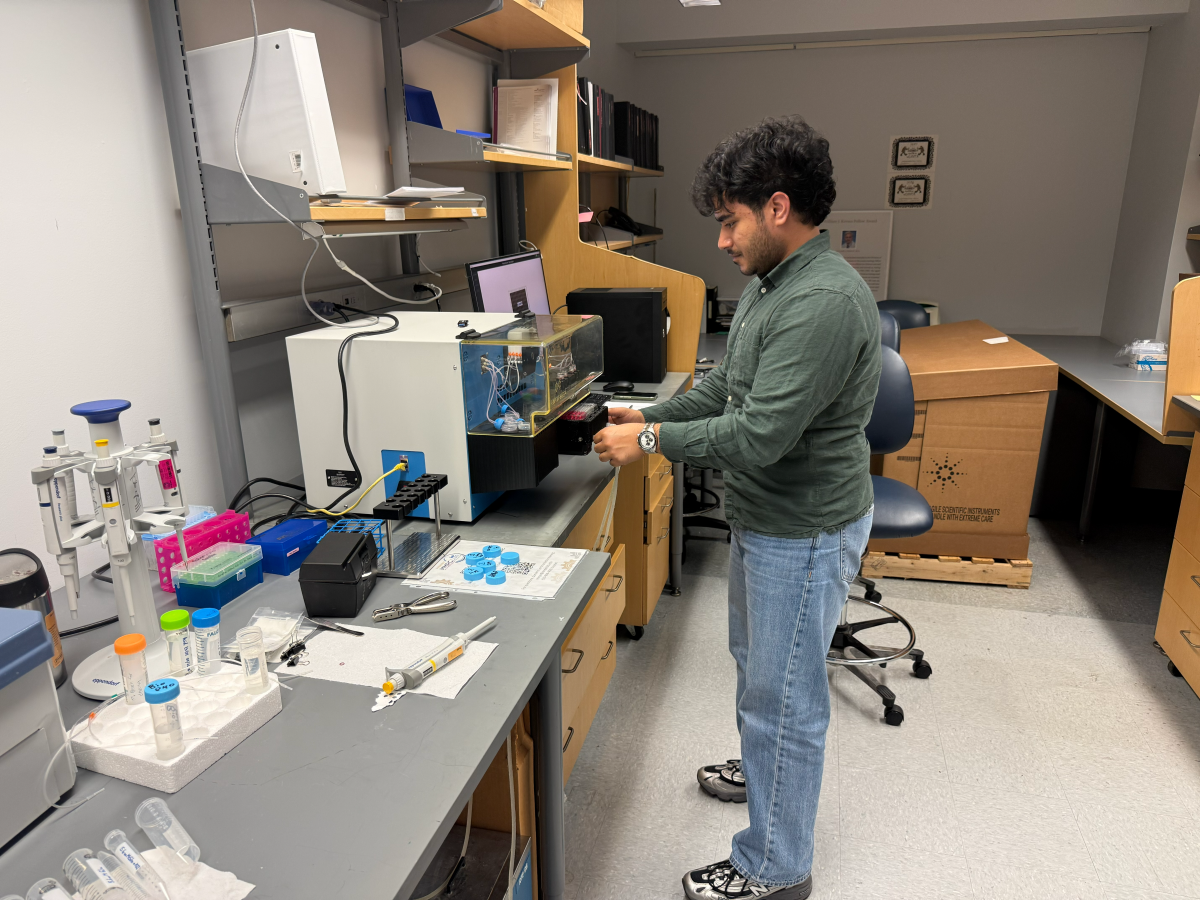
Co-Directors: Sean Davies, PhD and Jeff Spraggins, PhD
Managing Director: Dale Edgerton, PhD
Analytical Services Core
The Analytical Services Core (ASC) offers sensitive and reproducible analysis of hormones, catecholamines, amino acids, stable isotopes, and spatial imaging of metabolites, proteins, and transcripts in tissues.
Co-Directors: Julio Ayala, PhD and David Jacobson, PhD
Managing Director: Louise Lantier, PhD
Integrated Metabolic Physiology Core
The Integrated Metabolic Physiology Core (IMPC) provides a comprehensive platform for the design, execution, and interpretation of highly specialized procedures to study metabolic physiology in vivo using murine models and ex vivo using cells and islets, including human cell systems.
Co-Directors: Jennifer Below, PhD and Eric Gamazon, PhD, MS
Functional Multi-omics of Diabetes Core
The Functional Multi-omics of Diabetes Core (FMDC) meets the critical need for centralized, integrative computational biology support for studies that leverage human and tissue genomics/multi-omics to enable human translation of basic laboratory science. This Core provides computational biology support through analytics, access to diabetes-related human data, and investigative support throughout the life course of a project.
Co-Directors: Lauren Woodard, PhD and Mark Magnuson, MD
The Diabetes and Metabolic Modeling Core
The Diabetes and Metabolic Modeling Core (DMMC) provides DRTC members with diabetes-specific assistance for creating genetically modified mice relevant to diabetes research and for enabling access to human pluripotent stem cell-derived cells and organoids for diabetes research.